‘It was written’: Pedri’s cryptic post from 2025 goes viral after Spain’s FIFA World Cup triumph
Spain star Pedri's mysterious '190726' social media post from 2025 went viral after La Roja defeated Argentina to win the FIFA World Cup 2026.
Relive the defining moments of FIFA World Cup 2026, from Spain’s title triumph and Lionel Messi’s farewell to VAR controversies, Mbappe’s brilliance and rising stars.




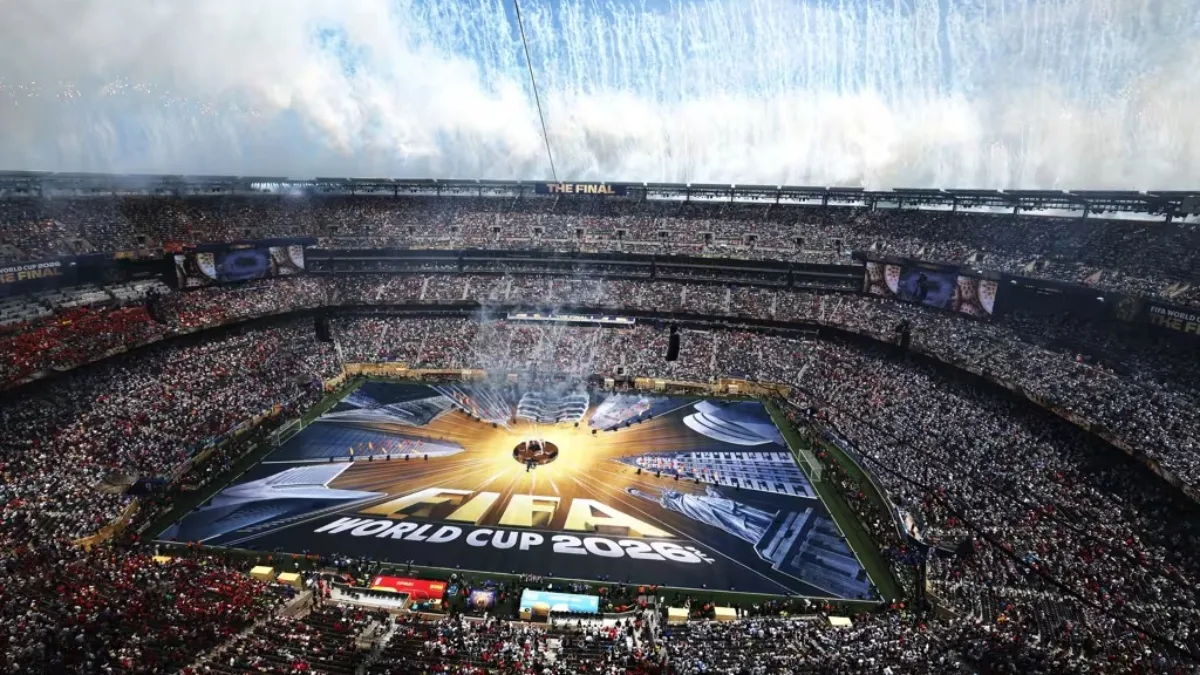
World Cup 2026: Novelty, controversy and farewell/ Credit: FIFA
The 2026 FIFA World Cup will be remembered as much for the football as for everything that surrounded it. From the first-ever 48-team tournament and a tri-nation hosting arrangement to controversial refereeing decisions, emotional farewells and the emergence of a new generation of stars, the competition marked the beginning of a new chapter in world football.
While Spain ultimately lifted the trophy after defeating Argentina 1-0 in extra time, the month-long tournament left behind storylines that stretched far beyond Ferran Torres’ title-winning goal in New Jersey.
Advertisement
The tournament broke new ground before a ball had even been kicked.
Advertisement
For the first time, 48 nations competed at football’s biggest event, while Canada, Mexico and the United States jointly hosted the competition, the first World Cup to be staged across three countries.
FIFA also introduced several new regulations, including mandatory hydration breaks in every match, stricter punishments for players attempting to conceal conversations by covering their mouths, and new goalkeeper time-wasting laws that awarded corners to attacking teams if keepers held the ball beyond the permitted limit.
The expanded format brought greater global representation and produced several memorable upsets, allowing emerging football nations to leave their mark on the biggest stage.
Spain arrived as European champions but left North America as world champions after producing one of the tournament’s most complete campaigns.
Rather than relying on individual brilliance, La Roja dominated through control, possession and defensive organisation. Rodri dictated games from midfield, Unai Simon anchored the defence with seven clean sheets, while teenage defender Pau Cubarsi announced himself among world football’s brightest young talents.
Their reward was a dramatic extra-time victory over defending champions Argentina, with Ferran Torres scoring the goal that secured Spain’s second FIFA World Cup title, 16 years after their triumph in South Africa.
The individual honours reflected Spain’s dominance. Rodri claimed the Golden Ball as the tournament’s best player, Cubarsi won the Young Player Award and Simon lifted the Golden Glove after an outstanding campaign.
One of the tournament’s biggest storylines revolved around Lionel Messi.
Playing in what is widely expected to be his final FIFA World Cup, the 39-year-old entered the tournament hoping to guide Argentina to back-to-back titles after their triumph in Qatar four years earlier.
One of the tournament’s most heartwarming storylines centred on Messi and Spain’s teenage sensation Lamine Yamal. Years after a photograph of a young Messi holding baby Yamal during a charity calendar shoot resurfaced and went viral, the pair shared an emotional moment following the World Cup final.
Messi once again proved why he remains one of football’s greatest players, finishing with eight goals and leading Argentina to another final.
But Spain’s disciplined midfield and defensive structure limited his influence in the title decider, ending the dream of a fairytale farewell.
The emotion extended beyond the pitch. Argentina coach Lionel Scaloni broke down in tears during his post-match press conference and admitted he was uncertain whether he would continue in charge beyond the expiry of his contract later this year.
Beyond their football, Argentina’s campaign also became one of the tournament’s most debated talking points.
Several refereeing decisions, VAR interventions and officiating appointments sparked widespread discussion among fans, pundits and former players throughout the competition. Critics questioned a number of decisions that went in Argentina’s favour and raised concerns over referee appointments for key knockout fixtures, while some rival football associations publicly voiced their dissatisfaction.
FIFA, however, stood by its officiating process and maintained that all refereeing and VAR decisions were taken in accordance with the Laws of the Game.
The controversy continued even after the final whistle. Spain’s 1-0 victory was overshadowed by an ugly post-match brawl in which Argentina midfielder Leandro Paredes was sent off after grabbing Spain defender Eric Garcia by the throat, while several players from both sides became involved in heated confrontations.
As one generation prepared to bow out, another announced its arrival.
Morocco midfielder Ayyoub Bouaddi emerged as one of the tournament’s breakout performers with mature displays that attracted Europe’s biggest clubs.
Cote d’Ivoire teenager Yan Diomande impressed with his pace and direct running, while Colombia’s Gustavo Puerta underlined his creative quality as his side reached the knockout rounds.
Spain’s Pau Cubarsi confirmed his immense potential with commanding performances at the heart of defence, while Lamine Yamal continued his rise as one of football’s brightest attacking talents.
At the same time, France captain Kylian Mbappe reinforced his status as the game’s leading superstar by becoming the first player to win the FIFA World Cup Golden Boot twice after finishing with 10 goals.
The tournament also marked the likely final World Cup appearances for several icons who have shaped modern football.
Lionel Messi, Cristiano Ronaldo, Luka Modric and Neymar all exited the World Cup stage, closing remarkable chapters that have defined the sport for nearly two decades.
Although none added another winners’ medal, each left behind legacies that will inspire future generations.
The 2026 FIFA World Cup was about far more than who lifted the trophy.
It introduced a new tournament format, welcomed fresh footballing powers, witnessed the rise of future superstars, reignited debates around refereeing and VAR, and brought the curtain down on one of the greatest generations the sport has ever known.
Spain may have walked away with the trophy, but the lasting legacy of the 2026 World Cup is likely to be remembered as the moment international football entered a new era.
Advertisement